Histories of Sardine Fisheries
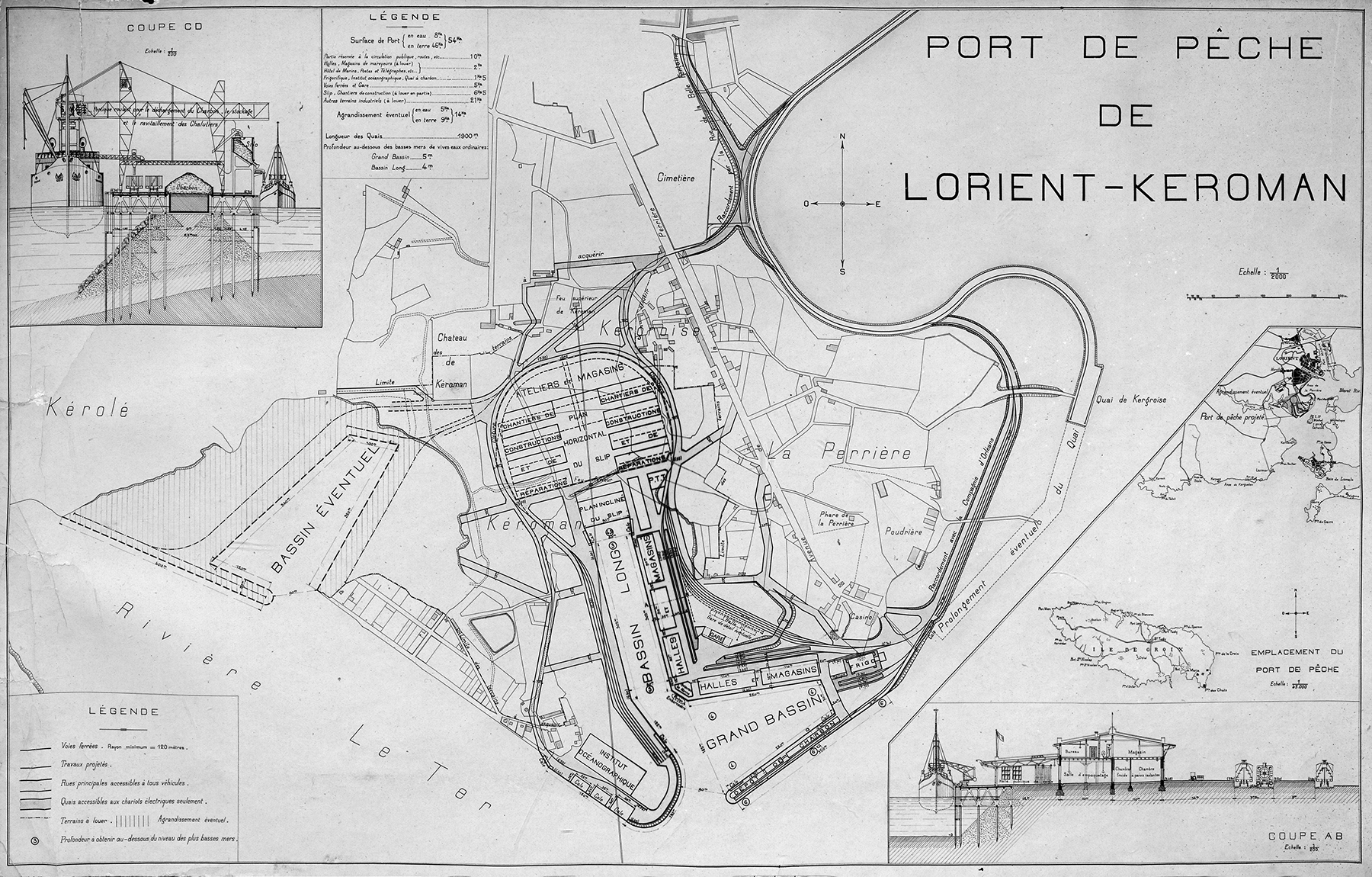
The historical relationship between fisheries and fish, including its impact on fish populations, has been the subject of research ranging from biology to oceanography. Yet such history has overlooked the connection between the fisheries and the associated dynamics on land. This paper addresses this gap by assessing the architectural and urban dynamics related to historical sardine fisheries in South Brittany, France.
Historical cartography and statistical analyses were combined to reconstruct the territories of the French Atlantic sardine fishery between 1846 and 1965. Drawing on historical data on fishing vessels, harbor infrastructures, canneries, fishing grounds, landings, and population censuses, the study examined how fishing activity, coastal architectures, and sardine populations interacted over the long term. The results reveal a long-term decline in sardine landings that cannot be explained by environmental variability alone, while harbor infrastructures continued to expand and fishing vessels became increasingly larger. These findings suggest that coastal infrastructures were not simply a response to fishing activity but acted as a material channel through which investment and fishing effort intensified the exploitation of sardine populations.
Available Open Access
Nouvet A, Tavares A, Secci-Petretto G, Sousa Santos R, Eyjólfsson G, Gabriel S, Soares C, Inglez de Souza D and Sillero N. Histories of sardine fisheries. architecture and environment in the Bay of Biscay (1846–1965). Open Research Europe 2026, 6:10. https://doi.org/10.12688/openreseurope.23094.2